
News in Review
| Andy Burnham officially became the leader of the Labour Party last Friday and outlined a series of key promises | The government’s first major policy decision is for VAT to be removed from domestic energy bills from October | Latest GDP figures from the Office for National Statistics (ONS) show the UK economy returned to growth in May |
“People are looking for us to deliver and we will”
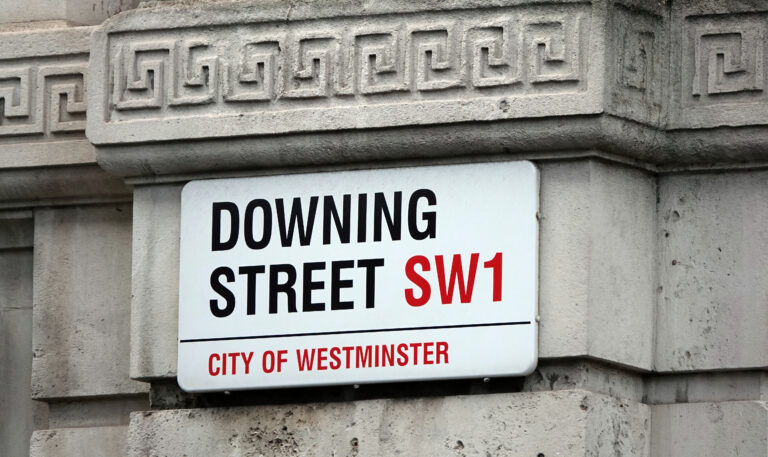
It has been a dramatic week in Downing Street. Following Keir Starmer’s departure from Number 10, Andy Burnham was formally appointed Prime Minister on Monday and quickly set about naming his Cabinet. His arrival makes him the UK’s seventh Prime Minister in just ten years.
Burnham officially became the leader of the Labour Party last Friday and outlined a series of key promises to improve the party – he pledged to build “a new politics” and give a voice to all parts of the UK. “People are looking for us to deliver and we will,” Burnham said.
On Monday, Sir Keir Starmer delivered his last speech before resigning as PM, giving his full support to his successor. In a meeting at Buckingham Palace, Burnham accepted King Charles’ offer to form a government and in his first speech as PM, said “we need to be better,” before promising to “make this moment a circuit breaker for Britain, bringing forward the biggest changes in the last forty years.” Burnham announced that he will reveal a 10-year plan for Britain later in the year, “laying out a path from where we are now to where I believe we all want Britain to be.” In the meantime, the new PM said he would introduce some cost-of-living measures to “give people some breathing space.”
Burnham then got to work forming his cabinet, with Angela Rayner rejoining as Housing Secretary after resigning from the role last September. Ed Miliband was confirmed as Foreign Secretary and Shabana Mahmood remains as Home Secretary.
“Time to get on with the job”
John Healey’s surprise appointment as Chancellor of the Exchequer came just weeks after he resigned as Defence Secretary from the previous government in protest over the Treasury’s failure to provide adequate defence funding. Sterling edging higher and analysts gave an encouraging initial assessment of the appointment, according to Reuters. In his first statement since being appointed Chancellor, Healey said, “Together, we will build a new economy, build new hope and advance the working people of this country. Time to get on with the job.”
The new Chancellor faces the difficult task of balancing competing priorities – finding more money for defence and other key public services, reviving a sluggish economy and reducing the welfare bill – all while keeping Burnham’s promise to stay within the government’s fiscal rules.
With the summer recess imminent, attention will soon turn to the Autumn Budget, the first major fiscal event for Burnham’s government, which will provide a clearer picture of his priorities and spending plans. A date has yet to be announced, although the Office for Budget Responsibility will require 10 weeks’ notice to prepare its economic and fiscal forecasts.
A “cost of living government”
The government’s first major policy decision was announced on Tuesday morning with the news that VAT on domestic energy bills will be removed from October, saving the average household £45 a year. This is in line with Burnham’s main aim to be a “cost of living government.” The initiative is expected to be funded by the cancellation of Keir Starmer’s digital ID programme. In Burnham’s first cabinet meeting, he promised to be transparent about how the government will pay for its policies.
International leaders have reacted to the news, with Burnham speaking to US President Trump shortly after taking office. The new PM also spoke to the President of the European Commission, Ursula von der Leyen, who said she looks forward to working with Burnham “to strengthen the EU-UK partnership” for the “prosperity of people on both sides of the Channel.”
UK economy shows modest growth
The latest GDP figures from the Office for National Statistics (ONS) show that the UK economy returned to growth in May as GDP grew monthly by 0.1%, following a contraction of 0.1% in April. This modest rise was driven by an expansion of 0.3% in the services sector but was offset by declines of 0.5% and 0.8% in the production and construction services respectively. In the three months to May, the economy expanded by 0.7%, following growth of 0.8% in the three months to April.
Fergus Jimenez-England at the National Institute of Economic and Social Research commented, “Today’s data confirm that growth remains fragile. As energy prices climb once more, all eyes are now on the new Prime Minister to deliver much-needed stability.”
Here to help
Financial advice is key, so please do not hesitate to get in contact with any questions or concerns you may have.
The value of investments can go down as well as up, and you may not get back the full amount you invested. The past is not a guide to future performance and past performance may not necessarily be repeated.
All details are correct at time of writing (22 July 2026)